Workshop Date
October 5, 2026
Location
Tempe, Arizona
Co-located with
IEEE ICNP 2026

Call for Papers

Quantum information science is rapidly evolving from isolated experimental platforms toward networked quantum systems that operate across distributed facilities and support a wide range of quantum applications. Recent advances in large- or even global-scale entanglement distribution with fiber, repeaters and satellites indicate that quantum capabilities are increasingly realized in distributed and networked manners, moving beyond end-to-end transmission toward wider-area infrastructures.

In such environments, quantum systems are no longer confined to single devices but instead operate conjunctively, interconnected through entanglements. However, building networked quantum systems and applications remains a formidable task. On one hand, fundamental physical limitations make long-distance quantum connections extremely costly and fragile, requiring non-trivial system and protocol innovations. On the other hand, reliance on large-scale classical infrastructure poses more challenges in reliability, coordination and interoperability. Addressing these challenges are key to achieving quantum advantages in both classical and quantum applications.

The 1st International Workshop on Networked Quantum Systems and Applications (NetQSA 2026) brings together researchers from networking, distributed systems, and quantum information science to explore these challenges. The workshop will focus on the design, analysis, and implementation of networked quantum systems and their applications, both classical and quantum.

Topics of Interest

The workshop solicits original theoretical and experimental contributions, including but not limited to:

Important Dates

All deadlines are at 23:59 AoE (Anywhere on Earth)

Submission Deadline
01
June 9, 2026July 8, 2026 (FIRM)
Notification of Acceptance
02
August 11, 2026
Camera-Ready Deadline
03
August 25, 2026
Workshop Date
04
October 5, 2026

Submission Guidelines

We invite two types of submissions:

All submissions will undergo a peer-review process and will be evaluated based on relevance, technical quality, and potential to stimulate discussion at the workshop. At least one author of each accepted paper is required to attend the workshop and present the work. Accepted papers will be included in the ICNP 2026 workshop proceedings and published in IEEE Xplore (subject to IEEE approval).

The IEEE template is available here.

Submission Site: https://netqsa26.hotcrp.com/

Committees

General Chairs

TPC Chairs

TPC Vice Chair for Information Systems

Publicity Chair

Technical Program Committee

Keynote Speakers

Morning Keynote (8:15–9:15 AM)

Toward Large-Scale Quantum Networks: From Low-Loss Links to Distributed Applications

Liang Jiang, The University of Chicago

Large-scale quantum networks require coordinated advances in communication hardware, error correction, and networked applications. I will begin with an overview of quantum-network architectures and representative repeater protocols. I will then introduce an alternative approach to mitigating photon loss in conventional optical channels: a novel vacuum beam guide that enables ultralow-loss, high-bandwidth transmission over long distances. Complementing this physical-layer innovation, I will present capacity-achieving bosonic quantum error-correction schemes with constructive encoding and decoding strategies for pure-loss channels. Finally, I will discuss how these technologies can enable distributed quantum computing, network-level error correction, and distributed quantum sensing. Together, these advances demonstrate how co-design across channels, codes, protocols, and applications can move quantum networking beyond point-to-point experiments toward scalable, useful systems.

Biography: Liang Jiang is a professor in the Pritzker School of Molecular Engineering at the University of Chicago. Jiang received his BS from Caltech and PhD from Harvard University. He was a faculty member at Yale University during 2012-2019. His research focuses on using quantum control and error correction to build large scalable quantum systems. Jiang is a Fellow of the American Physical Society and also a recipient of the Sloan Research Fellowship, the David and Lucile Packard Foundation Fellowship, and the APS Landauer-Bennett Award.

Afternoon Keynote (2:00–3:00 PM)

Quantum-Conventional Network Testbed: Measurements and Theories

Nageswara S. V. Rao, Oak Ridge National Laboratory

The quantum networks require the development of devices and methods unprecedented in conventional networks, and yet they critically depend on the latter for implementing foundational blocks and essential operations. We describe a quantum-conventional testbed to support measurements and theories for the development and testing of their functionality and performance. It incorporates a variety of entangled photon sources, qubit technologies, detector technologies, photonic components, and supporting conventional switches and workstations. It implements a novel fiber telescoping scheme that provides suites of connections using fiber spools and aerial-inground fiber loops. We briefly summarize a variety of experiments and analyses conducted over this testbed including: (i) flex-grid quantum connection experiments, (ii) quantum state and channel tomography, (iii) utilization of Quantum Key Distribution (QKD) keys to secure conventional encryption and firewall devices, (iv) unification of analytical capacity estimates and entanglement throughput over hybrid fiber connections, and (v) year-round measurements and AI/ML analysis of delay and polarization over aerial-inground fiber connections.
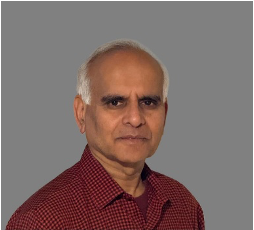
Dr. Nageswara S. V. Rao

Biography: Nagi Rao is a Corporate Fellow at Oak Ridge National Laboratory where he joined in 1993. He received PhD from Louisiana State University, ME from Indian Institute of Science, Bangalore, and BTech from National Institute of Technology, Warangal, India. His research interests are high-performance and quantum networking, rigorous machine learning methods, and information fusion. His quantum networking projects are funded by DOE and DARPA. He is a Life Fellow of IEEE and Fellow of International Society of Information Fusion.

Program

October 5, 2026  |  Room: MU 240 Navajo

Time Session Paper / Detail
8:00–8:10 AM Registration
8:10–8:15 AM Opening Remarks
8:15–9:15 AM Keynote

Toward Large-Scale Quantum Networks: From Low-Loss Links to Distributed Applications

Speaker: Dr. Liang Jiang (The University of Chicago)

9:15–10:30 AM Session 1 —
Distributed Quantum Computing

Dynamic Qubit Teleportation for Communication-Aware Distributed Quantum Execution

Lucinda Shen, Ruilin Zhou, Chen Qian (University of California, Santa Cruz)

Modeling and Comparison of Distributed Quantum Computing Architectures

Lan Yang, Chunming Qiao (University of Buffalo)

A Heralded Entanglement Factory for Modular qLDPC Codes via Memory Fusion of Low-Weight Primitives

Siddhant Singh (Delft University of Technology), Daniel Bhatti, David Elkouss (Okinawa Institute of Science and Technology)

Accuracy Is Not Enough: Reliability and Explainability of Delegated Quantum Inference for Retinal OCT Classification over a Noisy Quantum Link

Syed Mujtaba Haider, Silvia Figini (University of Pavia)

Quantum Repeaters with Automorphic CNOTs

Haoyan Lou (Rutgers University), Allison Klingler (Amherst College), Winston Li (Rutgers University), Pooja Kedia (Rutgers University), Enhyeok Jang (Yonsei University), Alexei Ashikhmin (Nokia Bell Labs), Yipeng Huang (Rutgers University)

Lyapunov-Preserving Quantum Policy Gradient for Constrained Networked Linear–Quadratic Control

Jin Dong (Oak Ridge National Laboratory), Lei Fan (University of Houston)

10:30–11:00 AM Coffee Break
11:00 AM–12:15 PM Session 2 —
Quantum Networking and Communication

Q-GUARD: Fidelity-Guaranteed Entanglement Routing with Distributed Purification Planning

Anthony Gatti, Anoosha Fayyaz, Prashant Krishnamurthy, Kaushik Seshadreesan, Amy Babay (University of Pittsburgh)

Resource-Aware Multipartite Entanglement Distribution in a Hypergraph Network

Mohadeseh Azari (University of Pittsburgh), Anoosha Fayyaz (University of Pittsburgh), Sanchali Banerjee (Thomas Jefferson High School for Science and Technology), Kaushik Seshadreesan (University of Pittsburgh)

A High-Performance Density-Matrix Backend for Quantum Network Simulation

Benedikt Baier, Niklas Keller, Wolfgang Kellerer (Technical University of Munich)

Q-net-Q: Architecture, Deployment, and Experimental Evaluation of a Multi-Scenario QKD Network Infrastructure

Nadim El Sayed (Hochschule Nordhausen), Paul Spooren (Hochschule Nordhausen), Andy Schreier (Fraunhofer HHI), Julius Schulz-Zander (Fraunhofer HHI), Natasa Pavlovic Tucakovic (Fraunhofer IOF), Jansen Dwan (Fraunhofer IOF), Sarika Mishra (Fraunhofer IOF), Darshit Suratwala (TU Berlin), Elham Amini (TU Berlin), Daniel Wagner (DE-CIX Management GmbH), Nino Walenta (Fraunhofer HHI), Ronald Freund (Fraunhofer HHI), Thorsten A. Goebel (Fraunhofer IOF), Fabian Steinlechner (Fraunhofer IOF), Yuliia Boiko (Hochschule Nordhausen), Thomas Huhn (Hochschule Nordhausen)

Heralded Bell-Pair Generation in Satellite-Based Time-Bin and Hybrid Entanglement Distribution

Runzhe Mo (University of Southern California), Huayue Gu (Kennesaw State University), Ruozhou Yu (North Carolina State University), Quntao Zhuang (University of Southern California)

Simplified Trusted Nodes using Twin Field QKD

Walter O. Krawec (University of Connecticut)

Towards Quantum-Network-Assisted Private Inference at the Edge

Xiangrui Xu (South Dakota State University)

12:30–2:00 PM Lunch Break
2:00–3:00 PM Keynote

Quantum-Conventional Network Testbed: Measurements and Theories

Speaker: Dr. Nageswara S. Rao (Oak Ridge National Laboratory)

3:00–3:30 PM Coffee Break
3:30–4:25 PM Session 3 —
Quantum Machine Learning

MTS-GUARD: Measurement-Space Target Separation for Backdoor Detection in Quantum Neural Networks

Junrui Zhang (Old Dominion University), Daniel Takabi (Old Dominion University), Chunsheng Xin (Iowa State University), Hongyi Wu (University of Arizona), Rui Ning (Old Dominion University)

Quantum Computing for Network Security Classification: Near-Term Classification and Long-Term Memory Efficiency

Yuqing Li (University of Pittsburgh), Poonam Bala Nehru (University of Houston), Yunpeng Zhang (University of Houston), Danindu Gammanpilage (University of Houston), Xin Jin (University of Pittsburgh), Zeguan Wu (University of Pittsburgh), Junyu Liu (University of Pittsburgh)

Split and Distill: Modular Quantum Knowledge Distillation via Model Decomposition

Wenrui Zhang, Tao Han, Nirwan Ansari (New Jersey Institute of Technology)

Transformer-Based Time-Series Inference of Lindblad Dynamics in Open Quantum Systems

Julian Guam, Jianqing Liu (North Carolina State University)

4:25–4:35 PM Coffee Break
4:35–5:30 PM Session 4 —
Quantum Security, Privacy & Post-Quantum Cryptography

Cyber Threat Intelligence for QKD Networks

David Koch, Swantje Kastrup, Hedwig Koerfgen, Fabian Farina (University of the Bundeswehr)

Sentinel-Based Failover for QKD-Augmented IPsec Tunnels

Juan Carlos Hernandez-Hernandez, Francesco Vista, Haftay Gebreslasie Abreha, Intidhar Bedhief, Seid Koudia, Symeon Chatzinotas (University of Luxembourg)

A Cost-Based Probabilistic Model for Classical Cryptography Breakability under Quantum Attacks

Mahdieh Mellaty, Darshana Upadhyay, Srinivas Sampalli (Dalhousie University)

S-CAD: Selective Classical Advantage Distillation for Quantum Conference Key Agreement

Trevor Thomas, Walter O. Krawec, Bing Wang (University of Connecticut)

5:30–5:40 PM Ending Remarks

Note (slot policy): Regular and Invited papers: 13 min; Abstracts: 8 min. Slots include Q&A and changeover.

Contact

For any questions regarding the workshop, please contact the organizing committees at netqsaicnp2026@gmail.com.

Supporters

NetQSA 2026 is co-located with and supported by IEEE ICNP 2026.

IEEE ICNP 2026